How the 1980s 'Preppy Murder' Reinvented Feminism
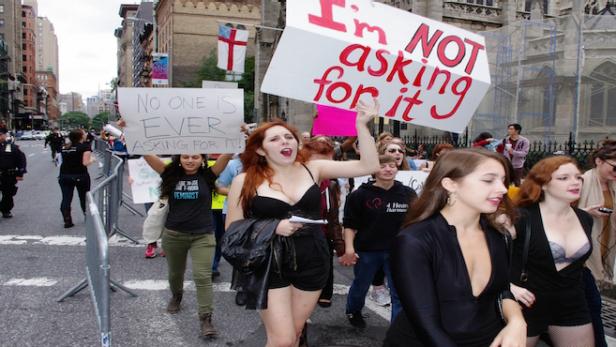
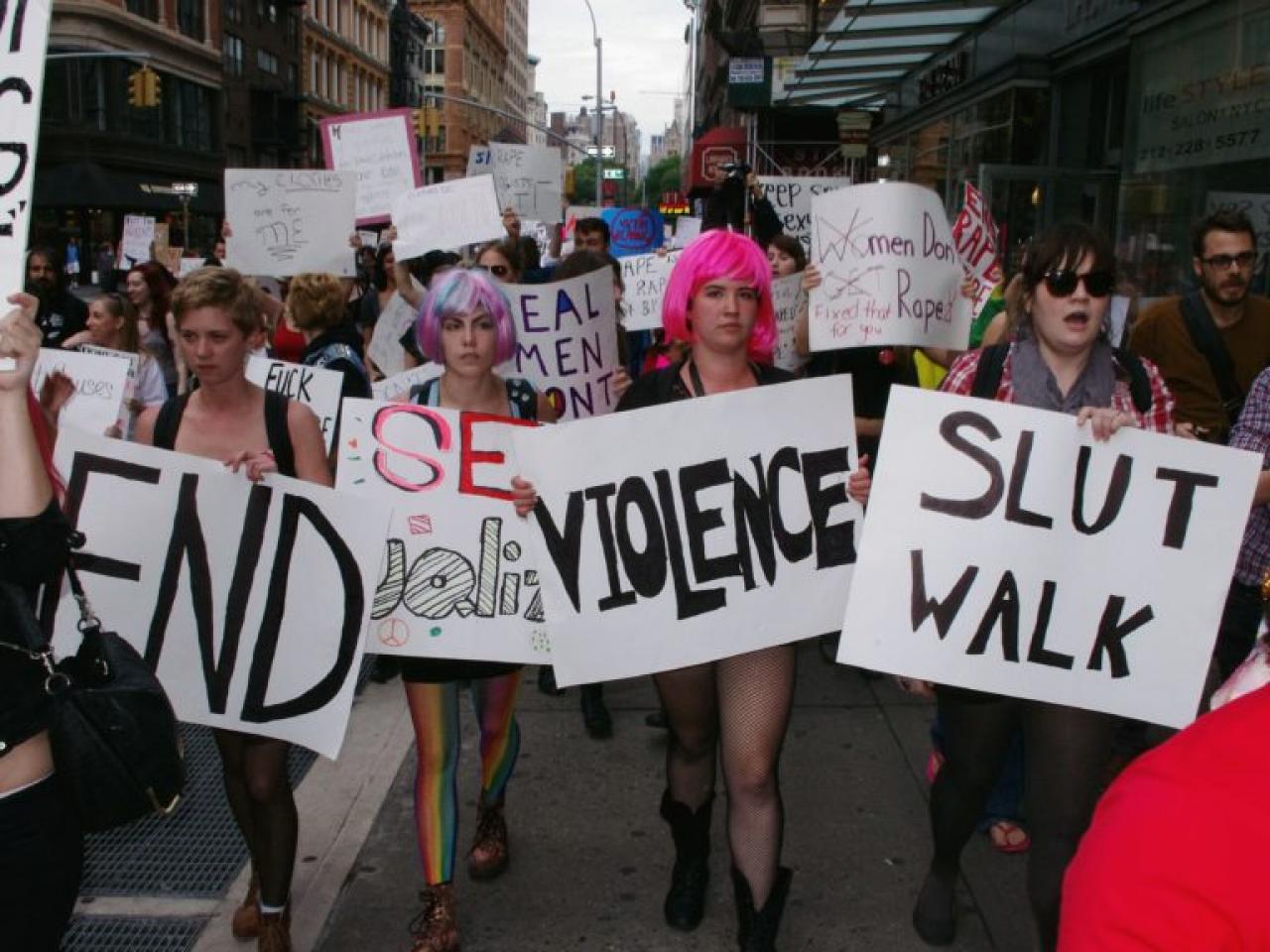
Slut Walk 2011, NYC [David Shankbone via Wikimedia Commons]
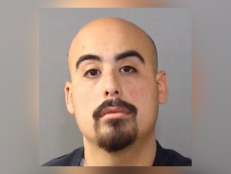
In the early hours of August 26, 1986, during a bout of what he described as “rough sex,” Robert Chambers, 19, fatally strangled Jennifer Levin, 18, in New York City’s Central Park. He then abandoned her body — shirt pushed up around her neck, skirt yanked down between her ankles—behind the Metropolitan Museum of Art.
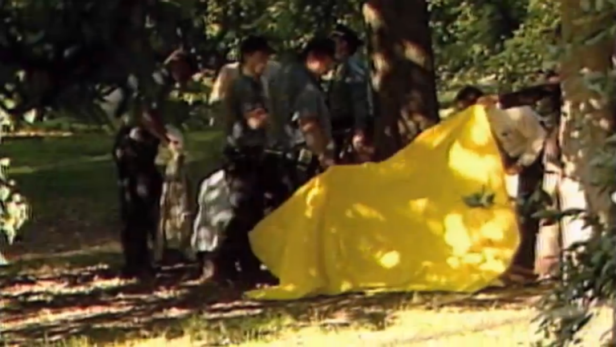
The crime scene. Photo: Crime with Tamron Hall: The Preppie Killer -- Where are they Now?
Pumped by the lurid prospect of drunken Upper East Side rich kids publicly copulating one another to death, tabloid media got one look at the movie-star-handsome Chambers and dubbed him “The Preppy Killer.” With that headline-ready nickname, a proto–American Psycho anti-star was born.
However, the murder of Jennifer Levin—and, perhaps even more so, the sensationalism surrounding it—also profoundly inspired a dynamic outlet for feminist activism that has continually grown more popular and powerful across the ensuing three decades.
Prior to the murder, Chambers and Levin had been openly and illegally consuming alcohol in Dorrian’s Red Hand, a local bar that functioned as a “clubhouse” for the teenage offspring of Manhattan’s cultural and financial elite. Post-drinks hook-ups in nearby Central Park often followed. Such was the time in mid-eighties New York City.
Bar patrons pointed the police right to Chambers, and the bruised, scratched-up suspect spent the following day maintaining he’d done nothing wrong, that Jennifer Levin was notoriously kinky, and that the deep scratches on his face and body came from an attempt to declaw his cat.
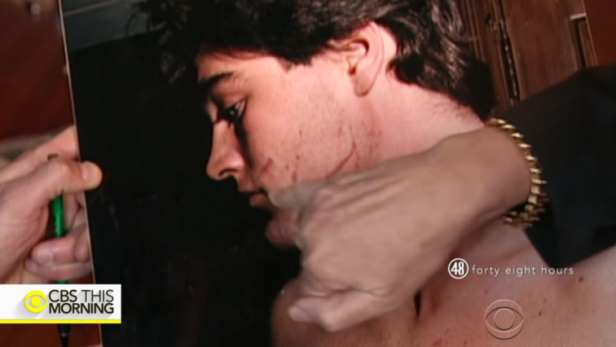
An examination of the scratches [48 Hours/screenshot]
The six-foot-four, 220-pound Chambers even cited self-defense, claiming five-foot-four, 115-pound Levin had forced herself on him. With acid sarcasm, District Attorney Steve Saracco replied, “I’ve been in this business a while, and you’re the first man I’ve seen raped in Central Park.”

From an interrogation video [48 Hours/screenshot]
In short order, Chambers got booked on second-degree murder charges and pleaded down to manslaughter during his trial. The intentional damage to Levin’s reputation took hold, though.
Chambers’s outspoken allies, which included high-ranking Catholic church officials and even the owner of Dorrian’s Red Hand (who posted bail), mounted a smear campaign that resulted in New York Daily News front-page banners on the order of “Sex Play ‘Got Rough’” and “How Jennifer Courted Death.” Stories even cropped up about Levin keeping a “sex diary” that chronicled her rampant erotic conquests. No such document existed.
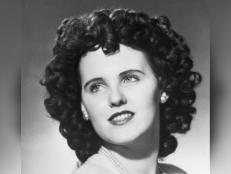
Ellen and Steven Levin, Jennifer’s parents, voiced outrage over the portrayal of their daughter as a reckless carnal thrill-seeker and the implication that she was therefore to blame, at least in part, for her own murder.
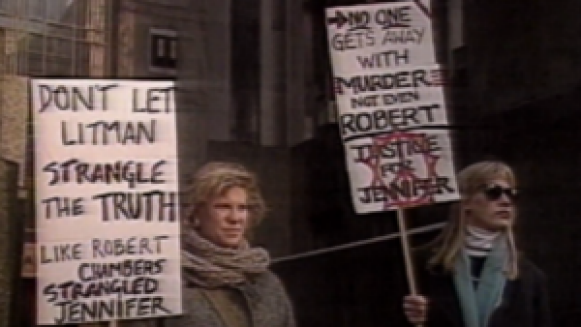
[Crime with Tamron Hall: The Preppie Killer -- Where are they Now?/screenshot]
Supporters rallied around the Levins and mounted “Justice for Jennifer” demonstrations, in particular outside the courtroom during Chambers’s trial. Buttons bearing that slogan became ubiquitous around the city. Take Back the Night, a feminist organization that had been staging anti-sex-crime events since the mid-seventies, took up the cause, and Jennifer Levin became an icon for protests against what would become known as “rape culture.”
In the years immediately following the “Preppy Murder” case, Take Back the Night exploded into an international phenomenon. Marches and demonstrations under the group’s auspices proved especially potent and prolific on college campuses. Young women who were around Jennifer Levin’s age when she was killed picked up the mantle and rallied.
The Riot Grrrl movement of the early nineties combined Take Back the Night camaraderie and tactics with politically charged punk rock. Jennifer Levin — who, in life, probably seemed as far removed from “punk” as possible—helped to fuel new, driven voices demanding an end to victim-blaming and “slut-shaming.”
In 2011, Toronto friends Sonya Barnet and Heather Jarvis heard about a York University public-safety lecture that included a police constable saying, “Women should avoid dressing like sluts in order not to be victimized.”
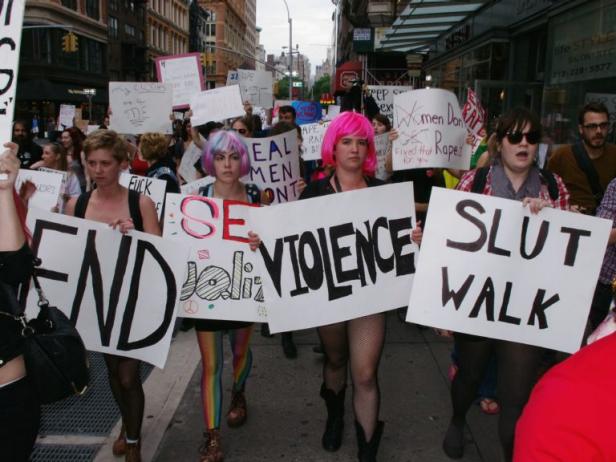
Slut Walk 2011, NYC [David Shankbone via Wikimedia Commons]
In angry response, Barnet and Jarvis organized the first SlutWalk, a march in which women paraded through the streets to the local police station while wearing anything from formal attire to office outfits to bikinis to body paint, in order to make that point that clothing in no way invites or excuses harassment or assault. The notion spread like wildfire via social media, and SlutWalks now occur regularly all over the planet.
That Jennifer Levin had to be murdered to light this liberating fire is massively tragic. That her memory carries on via activism that continues to heighten awareness, change attitudes, and elevate behavior is inspiring. Unfortunately, until the world stops producing the likes of Robert Chambers and his acolytes, this aspect of Levin’s legacy will remain necessary.